










Roger Benson: Senior Director, Commercial Sales, EMEA
Roger Benson is one of the industry’s leading experts in semiconductor sales and responsible for AMD’s commercial business in Europe, the Middle East and Africa. He has been at the forefront of AMD’s efforts to help partners respond to the pandemic and the fluctuating market conditions it created. We sat down with Roger to ask him about the past year, what he has learned and his plans for 2021.
What are AMD’s priorities for the commercial and enterprise sectors in 2021?
The priority is working with our partners to meet rising demand, driven by the dramatic increase in IT usage in the enterprise and public sectors. Now AMD has proven itself to enterprise IT decision makers, we will demonstrate our long-term commitment and roadmap execution. We are delivering this in 2021 through our “Zen 3” architecture, which has fed into our AMD EPYCTM server, and RyzenTM mobile and desktop product lines. Enterprise IT growth will continue to accelerate over the next 12 months, and we are working towards meeting that demand with our Ryzen and EPYC products. We are also working with our OEM and cloud partners to give them the products and technology they need to capitalise on the continued surge in demand.
What are the biggest differentiators between AMD and its main competitor in the commercial sector?
AMD works closely with our silicon foundry partners to take a leadership position in silicon manufacturing, which is not something the whole industry has managed to do over the past year. While some competitors have faced significant difficulties, AMD has led the industry with our 7nm chips in our server and client products.
The server space demands core computing performance and a balanced system. Our products are designed to balance and optimise core performance, memory bandwidth and IO bandwidth performance to suit our customers’ workloads and application needs. Our focus is on how to help customers solve business problems, from the first conceptual design to the final product.
Has the pandemic changed the market for data centres, server computing hardware and associated technologies?
I have seen and read about digital channels, rather than the physical channels businesses had relied on before the pandemic, becoming the fastest-growing revenue sources for many companies in this new normal.
Businesses have had to adapt by enabling remote working across their entire operations, which often requires new IT infrastructure and solutions to ensure business continuity and employee productivity is maintained. The most relevant enabling technologies here are cloud computing and cybersecurity. AMD is extremely well prepared to address both areas, now and in the future. The market needs more computing power and we can help provide it for on-premise data centres and the cloud.
Many of our customers have upgraded their networking lines to make sure that they have good enough infrastructure between the company and the employees’ homes. We have also seen a surge in client demand for new desktop and laptop PC products. We expect this demand and acceleration in the use of cloud computing will continue through 2021.
It really hit home for people during all the disruption that the quality of their work and collaboration demands the latest and greatest technology. From the smoothness of the video you’re making to the productivity of the applications you're using, it all depends on performance. We have seen strong demand for mid-range and high-end products as a result.
AMD has engaged with customers in all these areas and brought a new generation of processors to market that offer a suitable solution for everyone, from consumer and business clients to the latest data centre and cloud applications.
What has AMD been doing in the fight against COVID-19? Who is it partnering with?
Our chips are embedded in several of the ventilators helping COVID-19 patients recover and we have made donations to high-performance computing institutions to support research into the virus. We have also donated technology and hardware to Cambridge University in the UK, the Leibniz Supercomputing Centre and Stuttgart High-Performance Computing Centre in Germany, and to the GENCI research institution in France.
Across AMD’s commercial product lines and segments, workstations, laptops, and server CPUs as well as workstation GPUs, what are the long-term trends transforming the industry? What will their impact be?
AMD is focused on providing winning solutions on-premise and in the cloud. For the on-premise segment, we work with traditional server vendors such as HPE, Dell, Lenovo, Supermicro, and many others. Together with our partners we produce great hardware infrastructure solutions to meet enterprises on-site deployment needs.
Regarding the cloud, we have worked with global providers such as AWS, Microsoft, Azure, Google Cloud, IBM, and Oracle. We are also working with EMEA cloud providers such as OVH, Hetzner, Ionos, Scaleway, and others. AMD is focusing on traditional cloud architectures and hybrid solutions and we are working closely with these providers as well as ISVs such as VMware, to enable the highest levels of cloud security.
Cybersecurity is a key focus area for AMD which extends from our server product line through to our client product line. We offer secure encrypted virtualization, which is the foundation for confidential compute. Many of the confidential compute services that Google Cloud and Microsoft Azure offer are powered by our technology.
In the consumer space, we have seen a massive surge in demand as people work or learn from home. AMD helps here too in terms of security features and manageability. Our AMD PRO Security technologies offer extra layers of security to help ensure people can work remotely, and manage their data.
What role does the cloud play for AMD? How important is the public cloud in this regard?
Enterprise IT wants the best of both worlds, to be able to easily move workloads between on-premise data centres and the public cloud. We are collaborating closely with ISVs such as VMware, Red Hat, Microsoft, and others to make sure hybrid cloud solutions work well for customers when running on our processors.
What does AMD expect from GAIA-X? How important is GAIA-X for AMD?
AMD is a member of the GAIA-X eco Association. While we will contribute to the specifications for the federated multi-cloud environment envisioned by Gaia-X, our intention is to make sure the infrastructure standards as defined are kept as open as possible. We believe open standards are in the best interests of cloud providers and end users. Open standards enable workloads to be freely moved between cloud providers without customers being locked in to any one vendor or technology.
Many end users place a great deal of value on data sovereignty, security, and privacy. The expertise we have in security for the cloud and elsewhere can help guide GAIA-X as it defines its framework for operation. We are working with the project to help make sure that, as they develop the standards and how it is going to operate, it is kept as open as possible.
There is strength in diversity and realising that strength requires a lot of close collaboration, enabling everyone to work together as efficiently as possible. Europe will require a common, open approach to remain competitive. International businesses must be able to operate freely across the whole European landscape. Companies must not feel that they need one approach for one country and one for another.
This can be a positive aspect of GAIA-X if it is defined well and openly. People using the standard will be able to operate in the cloud without restriction, potentially even in multi-cloud environments with multiple vendors, all of whom have subscribed to the GAIA-X standards. That will enable businesses to operate freely, smoothly and compete internationally.
What is AMD doing to ensure it is not left behind in the AI race?
Organisations can use our server AMD EPYC processors to support AI decision making or inference workloads. They can also use our AMD Instinct data centre GPU family of products to support AI inference, as well as deep learning training workloads. There will be a greater focus from AMD in 2021 and in the coming years on expanding that GPU portfolio, this will be an incredible asset for expanding our business in the AI segment.
What are AMD’s plans for 5G technologies?
The global telco infrastructure sector has been transitioning to software-defined networks over the past few years. Many telco solutions are now based on standard commercial off-the-shelf servers from international server OEMs such as HPE, Dell, Lenovo, and others. We have been working very closely with these OEMs and large telco players such as Nokia and Ericsson. We believe the way forward is simply to take advantage of that software-defined transition, using standard servers from vendors.
How has AMD factored customer priorities into the design of its products and the way it works with key partners such as OEMs and the channel?
We have listened to partners who told us there was a need for high-performance together with energy efficiency. Energy efficiency is a key criterion whether you are building a data centre or whether you just want longer battery life from your laptop. AMD has put a lot of effort in over the past several years to make sure we are taking advantage of the latest manufacturing processes, such as 7nm technology. There is also the architectural design which AMD has conceived from the ground up to reduce energy consumption. This represents a massive reduction in electricity consumption for our customers which has a dramatic effect on their bottom line and their operational management. For individuals, this increased efficiency is part of the reason they can use their laptops for much longer without having to recharge.
What is AMD’s strategy for pushing the adoption of its commercial technologies?
The most fundamental one is raising awareness. Once enterprises try AMD, they realise the advantages. We use an x86 architecture that is completely software compatible with our competitors so end users can seamlessly move to AMD without having to worry. We have successfully built confidence in the market that AMD is committed to enterprise for the long term, by delivering several generations of successful products across server and client ranges. This is paying dividends as AMD is now regularly considered for proofs of concept which leads to volume deployments of our products across servers and in fleets of clients for enterprise IT.
What steps are you taking to strengthen relationships with channel partners and integrators?
We realise the full value chain is important. We have been increasing staffing for our channel organisations worldwide to ensure a uniformly good experience. AMD works closely with its key customers like HP, HPE, Dell, and Lenovo across both the client and server spaces. Rather than operate in siloes, we talk and compare notes to make sure we are doing the best we can to take care of all our channel partners. This means providing the quality content they need, the right incentive programs and the educational materials for their customers, end users and local integrators. Through a combination of OEM partnerships with the channel and by striving to make all our materials and programs best in class, we are continually strengthening our relationships with channel partners.
For customers who have switched from a competitor product to AMD in the past, what strategies worked from an AMD, OEM, or channel partner perspective?
We win when we can foster an open-minded willingness to try AMD in customers because once they try, we find that they switch to AMD-based systems at a very high rate. We work closely with partners, OEMs, and customers to facilitate proofs of concept. In some cases, we work closely with software vendors to make sure the solution is tuned and optimised for their needs, while getting every ounce of performance out of our products.
Are there any EMEA brand names or customers’ names to show as an example of companies or organisations adopting AMD solutions?
The most high-profile and, for many people, the most interesting case studies are those which highlight AMD’s work in the high-performance computing (HPC) segment. AMD is working with some of the world’s top academic and research institutions as well as leading commercial HPC clients.
For example, the European Centre for Medium-Range Weather Forecasts (ECMWF) will use one of the world’s most powerful meteorological supercomputers, made by Atos and powered by AMD EPYC processors, starting this year. It will run predictions at a far higher resolution of around 10km, offering reliable, advanced information about the occurrence and intensity of severe weather events.
Météo-France, the French national meteorological service, will also use an EPYC-powered supercomputer to anticipate unexpected small-scale high-impact meteorological phenomena, such as intense rainfall, gales, and the risk of hail and to further refine its studies of the impact of climate change.
The University of Stuttgart’s newly announced ‘Hawk’ supercomputer, powered by AMD EPYC processors, will enable scientists and researchers to run more complex simulations faster than ever. It is the largest installation of 2nd Gen EPYC processors in Germany and one of the largest in EMEA.
AMD also works with life sciences and pharmaceutical companies to use HPC for finding and modelling new drugs and treatments. Our technology helps manufacturers model new ways of working that save money, resources and energy. AMD hardware also helps the energy sector find new energy sources and optimise consumption in ways that make the industry more efficient and more sustainable.
Can you tell us anything about the roadmaps for AMD’s workstation and server products? What should the market be looking out for over the next year?
Keep a lookout for more OEMs announcing workstations using AMD technology this year, based on AMD Ryzen Threadripper PRO and EPYC processors. You will see new products based on AMD EPYC using the Zen 3 architecture in the data centre and cloud sectors, as well as broader product and services portfolios from our OEM and cloud partners.
To what extent does OEM and ISV feedback play a role in the development of AMD products?
We listen closely to our customers at all levels, from end users who are trying to solve business problems to OEMs who are working closely with them too. For example, in the last year or two we have released performance-optimised versions of our AMD EPYC server processors. These are being used for situations where customers need very high frequency, very low latency, and very high overall performance per core.
We did this in response to feedback from customers for specific use cases, like users of CAD and data-automation applications who told us that this is what they needed from a processor. This is how AMD tunes into the needs of individual segments and listens to our OEM and end user customers when creating new products.
How do the challenges differ across markets in 2021 and how difficult is it to get the right strategy for all markets in the age of COVID-19?
The AMD portfolio is broad enough and our technology robust enough to meet the needs of many different markets and categories. This gives us and OEMs the agility needed to respond to the widest possible range of customer needs.
What surprised you the most or was the most interesting thing you have learned during the last year?
What surprised and encouraged me most is peoples’ adaptability and how capable the IT industry is at supporting them. It is human nature to resist change, but it has been inspiring to see how, when forced to adapt at speed, people and businesses have risen to the challenge.
The extent to which IT departments have supported their organisations has also been extremely positive. It is as fascinating as it is encouraging to see digital transformation rocket up the corporate and social agenda over the past year.
The way that we have all adapted to home working and learning and adjusted our infrastructure from an IT perspective has been remarkable. As I mentioned before, people everywhere have upgraded their networks, moved to cloud computing, and are making greater use of personal productivity apps than ever before.
What are you most proud of, from you and your colleagues work over the last 6–12 months?
Ultimately, I am proud that AMD’s technology is being used to advance society. A key demonstration of this is in high-performance computing solutions. I mentioned before how you can use HPC to do everything from improve weather forecasting to accelerating new research into viruses like COVID-19. This input into combatting the virus is not just about understanding the disease, our supercomputing solutions are being used to better understand how we can manage society’s response to the virus too, for example by minimising transmission while people are waiting for a vaccine.
During the pandemic, AMD has contributed expertise and $15 million of high-performance computing systems to institutions including Cambridge University, the University of Stuttgart, MIT, NYU, Harvard Children’s Hospital, Leibniz Supercomputing Centre and the Stanford School of Medicine. This is what I am most proud of. As well as seeing our technology being used to drive economic prosperity, it is also being used to advance society and support human needs around the world.
What are you most excited about, that lies ahead in the next 12 months?
I am excited about AMD’s relentless execution against what must be the industry’s most inspiring roadmap. I worked with AMD’s principal competitor for just over 24 years, and I joined AMD because I saw the strength and the potential of that roadmap. We are uniquely positioned as the only company in the world to have key core strengths in both computing capabilities as well as graphics technology.
If there is one thing that you want people to know or remember about AMD in 2020–21, what is it?
AMD accelerates business. People now accept we have done a really good job in high performance computing and the cloud. Customers know they can buy a laptop based on our Ryzen series products and feel very confident it will perform well and do everything they want it to. We have also broken through the confidence threshold in the enterprise market which is continuing to accelerate. A key business objective now is to expand as fast as possible across the full spectrum of IT, in client computing, in the data centre and in the cloud. What customers and partners are understanding more and more is that AMD accelerates enterprises around the world.







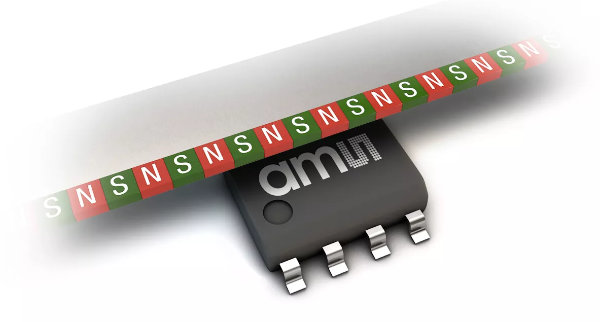
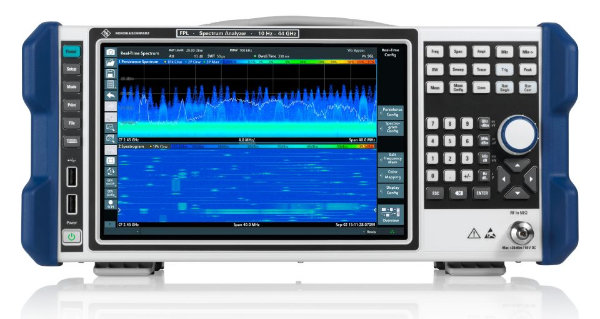


 Virtaamamittaus on monissa laitteissa kriittinen mutta usein ongelmallinen toiminto. Perinteiset mekaaniset anturit kuluvat ja jäävät sokeiksi pienille virtausnopeuksille. Ultraäänitekniikkaan perustuvat valmiit moduulit tarjoavat nyt tarkan, huoltovapaan ja helposti integroitavan vaihtoehdon niin kuluttaja- kuin teollisuussovelluksiin.